Basar Mir

Template: General SEO Archive

Learn SEO best practices, strategies, guides, and tutorials to improve rankings, traffic, and online visibility.

Types of SEO

Types of SEO Explained: On-Page, Off-Page, and Technical SEO

Search Engine Optimization (SEO) is one of the most effective ways to improve your website’s visibility, attract qualified visitors, and generate long-term business growth. However, many beginners believe SEO is simply about adding keywords to a webpage. In reality, successful SEO is built on several interconnected strategies that work together to improve your website’s performance. The three core pillars of SEO are On-Page SEO, Off Page SEO, and Technical SEO. Each plays a unique role in helping search engines understand, trust, and rank your website. In this guide, we’ll explain each type of SEO, why it matters, and how combining all three creates a strong foundation for better search rankings. At Basar Mir, we help businesses implement comprehensive SEO strategies that improve search visibility and deliver measurable results. What Are the Different Types of SEO? SEO can be divided into three primary categories: Think of your website like a house. When all three work together, your website has a much better chance of ranking higher in search results. What Is On-Page SEO? On-Page SEO refers to the optimization of individual webpages so search engines can better understand their content and users can easily find the information they need. It focuses on improving both relevance and user experience. Key Elements of On-Page SEO Well-optimized pages make it easier for search engines to determine what your content is about while providing visitors with a better browsing experience. What Is Off-Page SEO? While your website is important, search engines also evaluate how other websites and users perceive your brand. Off Page SEO focuses on building your website’s authority and credibility through activities that happen outside your website. Common Off-Page SEO Activities Search engines treat quality backlinks as votes of confidence. The more authoritative websites that reference your content, the stronger your website’s reputation becomes. However, quality always matters more than quantity. A few authoritative backlinks are far more valuable than hundreds of low-quality links. What Is Technical SEO? Even excellent content may struggle to rank if search engines cannot properly crawl or understand your website. Technical SEO focuses on improving your website’s infrastructure to ensure it performs efficiently. Important Technical SEO Factors Technical optimization improves both user experience and search engine accessibility, making it easier for your content to rank. Why All Three Types of SEO Matter Many businesses focus only on publishing content while ignoring technical issues or authority building. This creates an incomplete SEO strategy. Imagine publishing an excellent article: Long-term SEO success depends on balancing all three areas. How These SEO Types Work Together Each type of SEO supports the others. For example: A fast website with excellent content but no backlinks may struggle to compete. Similarly, a website with hundreds of backlinks but poor technical performance may lose rankings due to user experience issues. When you optimize every aspect of your website, you create a stronger overall SEO strategy that supports sustainable organic growth. Common SEO Mistakes to Avoid Businesses often make avoidable mistakes that limit their search performance. Some common mistakes include: Regular SEO audits help identify these issues before they impact rankings. Which Type of SEO Should You Prioritize? The answer is simple all of them. A successful SEO strategy begins with a technically sound website, continues with well-optimized content, and grows through strong online authority. Businesses that invest in every aspect of SEO typically experience: Rather than treating SEO as separate tasks, think of it as one integrated strategy. Why Businesses Need Professional SEO Services SEO continues to evolve with changing algorithms, AI-powered search, and increasing competition. Working with an experienced SEO professional ensures your strategy remains aligned with current best practices while delivering measurable results. Whether your goal is increasing traffic, generating leads, or improving online visibility, choosing the right SEO partner can make a significant difference. If you’re looking for a reliable Digital marketing service in delhi, partnering with experienced professionals can help your business implement effective SEO strategies that support long-term growth and stronger online performance. At Basar Mir, we combine proven optimization techniques with data-driven strategies to help businesses improve search rankings, attract qualified traffic, and stay ahead in an ever-changing digital landscape. FAQs 1. What are the three main types of SEO? The three primary types of SEO are On-Page SEO, Off Page SEO, and Technical SEO. Together, they help improve website visibility, authority, and search engine rankings. 2. Why is On-Page SEO important? On-Page SEO helps search engines understand your content while improving the user experience, making it easier for your pages to rank. 3. What does Off-Page SEO include? Off Page SEO includes activities such as backlink building, digital PR, brand mentions, guest posting, and reputation management to increase website authority. 4. What is the purpose of Technical SEO? Technical SEO ensures your website is fast, secure, mobile-friendly, and easy for search engines to crawl and index. 5. Which type of SEO delivers the best results? No single type is enough on its own. The best results come from combining On-Page SEO, Off Page SEO, and Technical SEO into one comprehensive strategy. 6. How often should SEO be updated? SEO should be monitored regularly, with audits performed every few months and content updated whenever necessary to remain competitive. 7. Can small businesses benefit from SEO? Yes. SEO helps businesses of all sizes increase online visibility, attract qualified traffic, and compete more effectively in search results. 8. How can Basar Mir help improve my SEO? Basar Mir provides customized SEO strategies that help businesses improve website performance, search rankings, organic traffic, and long-term digital growth.
Read More »
New GSC Update

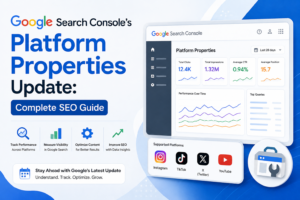
Google Search Console’s Platform Properties Update: Complete SEO Guide 

The way people discover content online is changing. Alongside websites, Google increasingly surfaces videos, social media posts, and creator content in its search results, giving users more ways to find information and interact with brands. To support this evolving search experience, Google announced the Platform Properties feature for Google Search Console on July 29, 2026. The update allows eligible users to measure how content from supported social platforms performs in Google Search, providing businesses with a more comprehensive view of their organic visibility. By bringing website and social search insights together, Platform Properties helps marketers make more informed SEO and content strategy decisions. What Is Google Search Console Platform Properties? Google Search Console Platform Properties is a new feature that helps eligible users measure the Google Search performance of supported social media platforms, including Instagram, TikTok, X, and YouTube.  Supported Platforms This provides a broader view of your brand’s search presence. Why the Google Search Console Platform Properties Update Matters for SEO The Platform Properties update helps businesses and SEO professionals better understand how social media content contributes to Google Search visibility. Here are the key reasons why it matters: How Search Behavior Has Changed Google Search now surfaces more than just webpages. Videos, social media content, and creator posts are becoming key sources of information for users. Modern users search for more than just webpages. They look for: Google now indexes and displays many of these content types, making social media an important part of an effective SEO strategy. How Platform Properties Supports Modern SEO As Google continues to integrate websites and social platforms into its search ecosystem, businesses that optimize both types of content will be better positioned to improve their organic visibility and reach a wider audience. The new feature helps businesses: What Performance Metrics Can You Track with Platform Properties?  After connecting eligible platforms, users can monitor: These metrics help identify which content generates visibility in Google Search. Before vs After Platform Properties Before After Website-only reporting Website + Social Platform reporting Multiple analytics tools Unified reporting Limited search insights Complete search visibility Traditional SEO Multi-platform SEO strategy Benefits of Adding Social Media Platform Properties How to Add a Platform Property Follow these steps to connect social media to Google Search Console: 1.Sign in to Google Search Console. 2. Open the property selector. 3. Click Add property. 4. Choose Instagram, TikTok, X or YouTube. 5. Sign in to the account that owns or manages the profile. 6. Authorise the connection and complete verification. 7. Click Go to property. How to Optimize Your Content for Google Search Console Platform Properties  To prepare for this update: Expert Insight from Basar Mir At Basar Mir, we believe Platform Properties marks an important step in the evolution of search. SEO is no longer limited to ranking webpages. Businesses should optimize websites, videos, and social media content together to build stronger organic visibility. A unified content strategy will become increasingly important as Google continues expanding AI-powered search experiences. What Should You Do Before Using Platform Properties?  Before Platform Properties becomes available: Conclusion Google Search Console’s Platform Properties update represents the next stage of search analytics. As Google continues indexing more social media content, businesses need to understand how websites and social platforms work together to improve organic visibility. At Basar Mir, we help businesses adapt to Google’s latest search innovations by developing SEO strategies that combine technical optimization, high-quality content, and multi-platform discoverability. As AI-powered search evolves, adopting an integrated SEO approach will be essential for long-term success. Frequently Asked Questions What is Google Search Console Platform Properties? Platform Properties is a Search Console feature that helps eligible users track how supported social media content performs in Google Search. Which social media platforms are supported? Instagram, TikTok, X (formerly Twitter), and YouTube. What metrics can I track? Clicks, impressions, CTR, average position, search queries, and top-performing content. Why is this update important? It helps businesses understand how social media contributes to organic search visibility and improves SEO decision-making. How can I access Platform Properties? Open Google Search Console, click Add Property, and check whether supported social platforms are available. Is Platform Properties free? Yes. It is included in Google Search Console for eligible users.

Read More »
Answer Engine Optimization

What Is Answer Engine Optimization (AEO)? A Complete Guide

If you’ve searched Google recently, you’ve probably noticed that you don’t always need to click on a website to get an answer. Google AI Overviews, ChatGPT, Gemini, Microsoft Copilot, and Perplexity can now answer questions instantly by summarizing information from multiple trusted sources. This shift has changed the objective of digital marketing. Instead of competing only for the first page of Google, businesses now compete to become the source that AI platforms reference. That’s exactly what Answer Engine Optimization (AEO) is designed for. At Basar Mir, we help businesses prepare for this new era by creating websites and content that can be understood by both search engines and AI-powered answer engines. Why Search Is Becoming Answer-First Search engines were originally designed to display a list of websites. Today’s users expect immediate answers. Instead of typing: “SEO consultant Dubai” People now ask: “Who is the best SEO consultant for improving AI search visibility?” Answer engines analyze thousands of webpages before generating one complete response. If your content is structured correctly, your business has a greater chance of being included. What Is Answer Engine Optimization? Answer Engine Optimization is the process of designing your website so AI platforms can easily understand, interpret, and present your content as an answer. Unlike traditional optimization, AEO focuses on: The goal isn’t simply to rank higher. The goal is to become the answer. Where Do AI Answer Engines Find Information? AI systems don’t invent information. They collect data from trusted sources across the internet. These include: The clearer your information is, the easier it becomes for AI to reference it. How Does AEO Work? Every time someone asks an AI assistant a question, it evaluates content based on several quality signals. These include: Websites that consistently satisfy these signals have a better chance of appearing in AI-generated answers. 7 Ways to Improve Your AEO Strategy 1. Answer Real Customer Questions Think about the questions your customers ask every day. Create dedicated pages that answer them completely instead of writing only promotional content. 2. Organize Information Clearly Large blocks of text are difficult for both readers and AI systems. Use: This improves readability and content understanding. Professional Content Writing helps transform complex topics into information that both users and AI systems can easily understand. 3. Improve Website Structure AI platforms perform better when websites are organized logically. An effective On-Page SEO strategy helps create clear page structures using optimized headings, internal links, descriptive titles, and well-organized content. 4. Build a Strong Technical Foundation Website performance still matters. Good Technical SEO ensures your website loads quickly, remains secure, and provides an excellent experience across desktop and mobile devices. 5. Increase Online Authority Answer engines trust businesses that are already recognized online. A strategic Off Page SEO campaign helps strengthen authority through quality backlinks, digital PR, and credible mentions across reputable websites. 6. Strengthen Your Local Presence Businesses serving a specific region should invest in Local SEO by optimizing business listings, collecting reviews, and maintaining consistent business information across trusted directories. 7. Keep Content Updated Answer engines prefer current information. Refreshing articles regularly helps maintain relevance and improves trustworthiness over time. Common AEO Mistakes Many businesses struggle because they: Avoiding these mistakes significantly improves content quality. Why AEO and SEO Work Better Together AEO isn’t replacing SEO. Instead, both strategies support each other. SEO helps users discover your website. AEO helps AI platforms recommend your content as the best answer. Businesses using both approaches create stronger online visibility than those relying on traditional SEO alone. The Future of Answer Engines AI-powered search is growing rapidly, and user behavior continues to evolve. Businesses that focus on creating trustworthy, well-structured, and informative content will be better positioned to succeed in the coming years. Preparing for answer engines today means preparing for the future of digital marketing. At Basar Mir, we help businesses adapt through modern optimization strategies that improve visibility across search engines and AI-powered platforms, ensuring long-term growth in an increasingly AI-driven search landscape. FAQs  1. How is AEO different from traditional SEO? Traditional SEO focuses on improving rankings in search engine results, while AEO focuses on making your content easy for AI platforms and answer engines to interpret and recommend as the best answer. 2. Why is AEO important in 2026? With the growing use of AI-powered search tools like Google AI Overviews, ChatGPT, Gemini, and Perplexity, AEO helps businesses increase visibility where users are increasingly searching for answers. 3. Which businesses should invest in AEO? Any business with an online presence can benefit from AEO. It is especially valuable for service providers, eCommerce stores, local businesses, SaaS companies, healthcare providers, educational institutions, and B2B organizations. 4. How can I optimize my website for AEO? To optimize for AEO, create content that answers user questions clearly, organize information with headings and FAQs, improve website performance, maintain accurate information, and establish authority in your industry. 5. Does AEO replace SEO? No. AEO complements traditional SEO. Combining both strategies helps improve visibility in search engines as well as AI-generated search experiences. 6. What are the benefits of Answer Engine Optimization? AEO can improve brand visibility, increase qualified traffic, build trust, enhance user experience, and position your business as an authoritative source in AI-powered search results.

Read More »
What is AI SEO

What Is AI SEO? A Beginner’s Guide to AI in Search Optimization

The way people search online has changed dramatically over the past few years. Instead of relying only on traditional search engines, users now ask AI-powered platforms like ChatGPT, Google AI Overviews, Gemini, and Perplexity for direct answers. As a result, businesses need to rethink how they optimize their websites for search. This shift has introduced a new approach known as AI SEO. It goes beyond traditional optimization by helping websites become more discoverable across both search engines and AI-driven platforms. For businesses looking to stay competitive, understanding AI SEO is no longer optional it’s essential. At Basar Mir, we help businesses adapt to this evolving search landscape with strategies designed to improve online visibility, build authority, and attract qualified organic traffic. What Is AI SEO? AI SEO (Artificial Intelligence Search Engine Optimization) is the practice of optimizing websites so they perform well in both traditional search results and AI-generated responses. Rather than focusing only on keyword rankings, AI SEO emphasizes creating valuable, trustworthy, and well-structured content that AI systems can understand and reference. Modern AI platforms evaluate information differently. They look for content that answers questions clearly, demonstrates expertise, and provides genuine value to users. This means businesses need a more comprehensive approach to optimization. Why AI SEO Is Important Search behavior continues to evolve as users prefer conversational queries over short keywords. Instead of searching for a simple phrase, people now ask detailed questions expecting complete answers. For businesses, this creates an opportunity to become a trusted source of information. Websites optimized for AI search can benefit from: Companies that invest in AI SEO today are preparing themselves for the future of online search. How AI Search Works Unlike traditional search engines that mainly rank pages based on keywords and backlinks, AI-powered search systems evaluate several factors together. They analyze context, intent, content quality, website authority, technical performance, and overall user experience before recommending information. This means every aspect of a website contributes to its visibility. Essential Elements of AI SEO Create Helpful Content High-quality information remains one of the strongest foundations of successful AI SEO. Businesses should focus on answering real customer questions with clear, accurate, and useful information rather than creating content solely for search engines. Professional Content Writing helps produce informative articles, guides, FAQs, and resources that establish authority while improving user engagement. Optimize Every Page Well-structured webpages help both search engines and AI models understand your content more effectively. An effective On-Page SEO strategy includes optimized titles, headings, internal links, image optimization, descriptive URLs, and content that is easy to read. Organizing information logically also improves the overall user experience. Maintain a Healthy Website Even the best content may struggle to perform if a website has technical issues. Strong Technical SEO ensures your website loads quickly, functions smoothly across devices, remains secure, and allows search engines to crawl and index pages efficiently. A technically optimized website creates a better experience for both visitors and AI systems. Build Authority Online Search engines and AI platforms prefer websites that demonstrate credibility. A solid Off Page SEO strategy focuses on earning high-quality backlinks, increasing brand mentions, and establishing authority through trusted external sources. Building a strong online reputation improves trust and increases the likelihood of being recommended by AI-powered search platforms. Strengthen Your Local Presence Businesses serving specific geographic areas should not overlook Local SEO. Optimizing your business profile, maintaining consistent business information, collecting customer reviews, and improving local visibility help attract nearby customers and increase trust. As AI-powered assistants become more location-aware, businesses with strong local signals are more likely to appear in recommendations. AI SEO vs Traditional SEO Traditional SEO focuses primarily on improving rankings within search engine results pages. AI SEO expands on these principles by optimizing content for conversational searches and AI-generated answers. While keywords still matter, success increasingly depends on delivering comprehensive information that satisfies user intent. Websites demonstrating expertise, authority, and trustworthiness are more likely to be referenced by AI systems. Rather than replacing traditional SEO, AI SEO enhances it by aligning optimization strategies with the future of search. Best Practices for AI SEO Businesses looking to improve their AI search visibility should follow these best practices: Common Mistakes to Avoid Many businesses still rely on outdated SEO techniques that are less effective in today’s search environment. Avoid practices such as: Focusing on quality instead of shortcuts leads to more sustainable results. The Future of Search Optimization Artificial intelligence will continue to influence how people discover information online. Businesses that adapt early will be better positioned to gain visibility, build trust, and reach customers wherever they search. Success in AI-driven search isn’t about replacing traditional SEO it’s about expanding your strategy to meet changing user behavior and evolving technology. At Basar Mir, we help businesses prepare for the future through data-driven AI SEO strategies that improve search performance, strengthen digital authority, and drive sustainable business growth. Whether you’re just beginning your optimization journey or looking to enhance your existing strategy, investing in AI SEO today can help your business remain competitive in the years ahead. FAQs 1. How is AI SEO different from traditional SEO? Traditional SEO focuses on improving rankings in search engine results, while AI SEO also optimizes content for AI-generated answers by emphasizing user intent, content quality, authority, and relevance. 2. Why is AI SEO important for businesses? As more users rely on AI-powered search, AI SEO helps businesses increase online visibility, attract qualified traffic, build credibility, and stay competitive in the evolving digital landscape. 3. Can AI replace traditional SEO? No. AI SEO complements traditional SEO rather than replacing it. Businesses achieve the best results by combining proven SEO practices with strategies designed for AI-driven search experiences. 4. What are the key elements of AI SEO? Successful AI SEO includes creating high-quality content, maintaining a technically optimized website, improving user experience, building authority, and publishing accurate, trustworthy information. 5. Which AI search platforms should businesses optimize for? Businesses should optimize their content for AI-powered platforms such as

Read More »
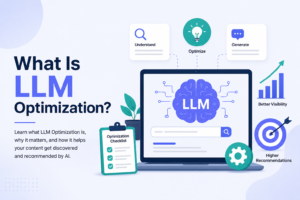
What is LLM

What Is LLM Optimization (LLMO)? A Beginner-Friendly Explanation

Traditional search engines are no longer the only way people find information online. Today, users increasingly rely on AI-powered tools such as ChatGPT, Gemini, Claude, and Perplexity to get direct answers to their questions. These large language model (LLM) platforms analyze vast amounts of information and generate conversational responses instead of simply displaying a list of links. As AI-powered search becomes more popular, businesses, marketers, and content creators are looking for ways to ensure their content is visible within these AI-generated answers. This is where Large Language Model Optimization (LLMO) comes into play. LLMO is an emerging strategy that focuses on making content easier for large language models to understand, trust, and reference when generating responses. Understanding the basics of LLMO can help businesses stay visible in the future of search and information discovery. What Is LLM Optimization (LLMO)? Large Language Model Optimization (LLMO) is the practice of optimizing digital content so that AI systems and large language models can easily understand, process, and reference it when answering user queries. Unlike traditional search engine optimization (SEO), which aims to improve rankings on search engine results pages, LLMO focuses on increasing the likelihood that AI-powered platforms will use your content as a trusted source when generating responses. The goal is not simply to rank higher in search results but to become a reliable source of information that AI systems can confidently reference. Understanding Large Language Models Before exploring LLMO further, it helps to understand what large language models are. Large language models are advanced AI systems trained on massive amounts of text data. They use this information to understand language patterns, answer questions, summarize content, and generate human-like responses. Popular examples include: These platforms process information differently from traditional search engines. Instead of displaying webpages in ranked order, they generate direct answers based on the information they have access to and consider trustworthy. Why LLMO Matters As AI-powered search tools gain popularity, content visibility is no longer limited to search engine rankings. LLMO matters because: Organizations that adapt early to this shift can improve their chances of maintaining visibility as search technology evolves. LLMO vs SEO: What Is the Difference? Although LLMO and SEO share some similarities, they are not identical. Traditional SEO SEO focuses on improving visibility in search engine results pages by optimizing factors such as: The primary goal is to achieve higher rankings on search engines like Google and Bing. LLM Optimization LLMO focuses on helping AI systems understand and trust content. Its priorities often include: Rather than ranking webpages, LLMO aims to increase the likelihood of being referenced in AI-generated responses. How They Work Together LLMO does not replace SEO. Instead, it builds upon many SEO best practices. Well-optimized content often performs better in both traditional search engines and AI-powered search environments. Businesses should view LLMO as a complementary strategy rather than a replacement for SEO. How Does LLM Optimization Work? Large language models process content differently than traditional search engines. To improve AI visibility, content creators should focus on several key areas. Creating Clear and Well-Structured Content AI systems perform better when content follows a logical structure. Best practices include: A structured format helps AI systems understand relationships between topics and extract relevant information more effectively. Answering Questions Directly Many AI-powered searches are conversational. Users often ask questions such as: Content that provides direct, concise answers to these questions is more likely to be useful for AI-generated responses. Demonstrating Expertise and Credibility Trust plays a major role in AI-generated information. Content should demonstrate: The more trustworthy the content appears, the greater its potential value to AI systems. Building Topical Authority Topical authority refers to covering a subject comprehensively. Rather than publishing isolated articles, businesses can create content clusters that address multiple aspects of a topic. For example, a website discussing LLMO might also publish content about: Comprehensive coverage helps establish authority within a topic area. Best Practices for LLM Optimization Focus on User Intent Understand what users want to know and provide clear answers. Content should solve problems, answer questions, and address common concerns. Use Natural Language AI systems are designed to understand conversational language. Write naturally while maintaining professionalism and clarity. Avoid keyword stuffing or unnatural phrasing. Organize Content Logically A clear hierarchy helps both readers and AI systems understand information. Use: Keep Information Accurate and Updated AI systems value reliable information. Regularly review content to ensure: Include Helpful FAQs Frequently Asked Questions align with how users interact with AI assistants. FAQ sections provide concise answers that can improve content accessibility and user experience. Common Challenges of LLMO While LLMO offers exciting opportunities, it also presents challenges. These include: Because the field is still developing, businesses should remain flexible and continuously monitor changes in AI search behavior. The Future of LLM Optimization AI-powered search is expected to continue growing over the coming years. As users increasingly seek direct answers instead of traditional search results, content creators will need to adapt their strategies accordingly. Future success may depend on: Businesses that embrace these principles today will be better prepared for the next generation of search experiences. Conclusion Large Language Model Optimization (LLMO) is an emerging approach that helps content become more visible and useful within AI-powered search platforms. While traditional SEO focuses on search engine rankings, LLMO aims to make content understandable, trustworthy, and reference-worthy for large language models. As AI assistants become a common way for people to discover information, optimizing content for both search engines and AI systems will become increasingly important. By focusing on clarity, authority, structure, and user intent, businesses can improve their chances of staying visible in the evolving digital landscape. Frequently Asked Questions LLMO stands for Large Language Model Optimization, a strategy focused on making content easier for AI systems to understand and reference. SEO aims to improve rankings in search engine results, while LLMO focuses on increasing visibility within AI-generated responses and conversational search platforms. LLMO helps businesses adapt to the growing use of AI-powered search tools and

Read More »
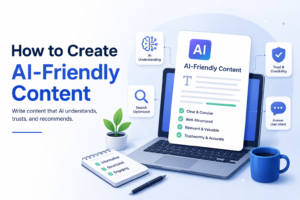
How to Create AI-Friendly Content

How to Create AI-Friendly Content: Structure, Formatting, and Writing Techniques

Artificial intelligence is changing the way people discover and consume information online. Search engines now use AI-powered features, while platforms like ChatGPT, Gemini, and Perplexity generate direct answers from trusted content sources. As a result, creating content that is easy for both humans and AI systems to understand has become essential. AI-friendly content is not about writing for machines alone. It is about creating clear, well-structured, and valuable content that can be easily interpreted, indexed, and cited by AI systems while delivering a great user experience. By focusing on structure, formatting, and writing techniques, you can improve visibility across traditional search results and AI-generated answers. What Is AI-Friendly Content? AI-friendly content is content that is organized, easy to scan, and provides direct, reliable answers to user questions. AI systems analyze page structure, headings, context, and relevance to determine whether content is useful enough to include in generated responses. Unlike traditional SEO content that may focus heavily on keywords, AI-friendly content prioritizes clarity, topical depth, credibility, and logical organization. The goal is to make information easy to extract and understand. Why AI-Friendly Content Matters in SEO As AI-powered search experiences become more common, content creators need to optimize beyond traditional rankings. Benefits of AI-friendly content include: Research and industry observations show that content with strong structure, evidence-backed information, and clear formatting is more likely to be surfaced by AI systems. Structure Your Content for AI Understanding Start with a Direct Answer One of the most effective ways to create AI-friendly content is to answer the primary question early in the article. Instead of writing a lengthy introduction, provide a concise explanation within the first few paragraphs. For example, if your topic is “What is AI-friendly content?”, answer that question immediately before diving into details. This approach helps AI systems quickly identify the main topic and improves the chances of your content being referenced in AI-generated responses. Use a Clear Heading Hierarchy Headings help both readers and AI systems understand the structure of your content. Follow a logical hierarchy: A well-organized heading structure improves readability and helps AI identify relationships between topics. AI systems often use headings as contextual signals when analyzing content. Create Detailed Outlines Before Writing A strong outline serves as the foundation of AI-friendly content. It ensures logical flow and comprehensive topic coverage. Before writing the content: Professional content writers often use detailed outlines to maintain clarity and ensure that every section contributes value. How to Improve Readability Through Formatting Keep Paragraphs Short Large blocks of text can be difficult for readers and AI systems to process. Aim for: Short paragraphs improve scannability and make information easier to digest. Use Bullet Points and Numbered Lists Lists help break down complex information into smaller, digestible sections. Use bullet points when: Use numbered lists when: Structured content is easier for AI systems to extract and present in responses. Include FAQ Sections Frequently Asked Questions provide direct answers to common user queries. Question-based content aligns closely with how users interact with AI assistants and search engines. Writing Techniques That Make Content AI-Friendly Focus on Search Intent Before writing, understand what the audience wants to know. Common search intents include: When your content directly addresses user intent, it becomes more useful and relevant to both readers and AI systems. Provide Evidence and Credible Information AI systems favor content supported by trustworthy information. Strengthen your content with: Evidence-backed content improves credibility and increases the likelihood of being referenced by AI-generated answers. Add Human Experience and Unique Insights AI-generated content alone often lacks originality. To stand out, incorporate: Unique perspectives make content more valuable and help establish authority. Human expertise remains a key differentiator in the AI era. Write in a Conversational Yet Professional Tone AI systems tend to favor content that is easy to understand. Best practices include: A conversational writing style improves user engagement while making content easier for AI to interpret. What are Common Mistakes to Avoid While Creating AI-Friendly Content When creating AI-friendly content, avoid: Successful AI-friendly content combines automation with human expertise and editorial review. Summary Creating AI-friendly content requires more than simply adding keywords. The most effective content is structured, easy to read, well-formatted, and designed to answer user questions clearly. By using logical heading hierarchies, concise formatting, evidence-backed information, and original insights, you can improve both user experience and AI visibility. As AI continues to shape search and content discovery, writers who focus on clarity, credibility, and helpfulness will be better positioned to reach wider audiences and earn greater visibility online. Frequently Asked Questions AI-friendly content is content that is structured, clear, and easy for AI systems to understand, analyze, and reference while providing value to readers. A clear structure helps AI systems identify key topics, understand relationships between sections, and extract information more accurately. Yes. Proper use of H1, H2, and H3 headings improves content organization and helps AI systems understand the hierarchy of information. Yes, provided the content is accurate, helpful, original, and enhanced with human expertise and fact-checking. The best format includes a direct answer, logical heading structure, short paragraphs, bullet points, FAQs, and evidence-backed information.

Read More »
What is SEO

Beginner’s Guide to SEO: Learn the Basics of Search Engine Optimization

Search Engine Optimization (SEO) is the process of improving a website’s visibility in search engine results. When users search for products, services, or information online, SEO helps your website appear in front of the right audience. Whether you’re a business owner, marketer, blogger, or website manager, learning SEO can help you attract more organic traffic, increase brand awareness, and generate leads without relying solely on paid advertising. This guide covers the fundamentals of SEO, how search engines work, and the key practices beginners should focus on. What Is SEO and How Does It Help Websites Grow? SEO involves optimizing your website so search engines can understand and rank your content more effectively. The main goal is to increase organic traffic by appearing for relevant search queries. Unlike paid ads, SEO can continue driving traffic over time, making it a valuable long-term digital marketing strategy. Benefits of SEO for Businesses and Websites SEO offers several advantages: Understanding How Search Engines Find and Rank Content Search engines use automated systems to discover, organize, and rank content across the internet. Crawling: Discovering Web Pages Across the Internet Search engines use bots, often called crawlers, to find new and updated web pages. These bots follow links to discover content and understand website structures. Indexing: Storing and Organizing Content Once a page is discovered, search engines analyze its content and store it in an index. Indexed pages become eligible to appear in search results. Ranking: Determining the Most Relevant Results When someone performs a search, search engines evaluate indexed pages and rank them based on relevance, quality, authority, and user experience. The Three Essential Pillars of SEO Every Beginner Should Know Successful SEO strategies are built on three core areas. On-page SEO focuses on elements within your website, including: These elements help search engines understand your content and improve user experience. Technical SEO ensures search engines can easily crawl and index your website. Important technical factors include: A technically sound website creates a strong foundation for rankings. Off-page SEO refers to activities outside your website that influence rankings. The most important factor is backlinks, which are links from other websites pointing to your content. Quality backlinks signal credibility and authority to search engines. Understanding Search Intent Before Creating Content Search intent is the reason behind a user’s search query. Matching content with user intent is essential for ranking success. Examples include: Examples include: Examples include: Examples include: Creating content that aligns with search intent improves both rankings and engagement. Keyword Research: Finding the Right Topics and Search Terms Keyword research helps identify the words and phrases your audience uses when searching online. How Beginners Can Find SEO Keywords Useful keyword research methods include: How to Choose Keywords That Support Your SEO Goals Focus on keywords that: Selecting the right keywords helps attract qualified visitors to your website. Creating SEO-Friendly Content That Users and Search Engines Value Content is one of the most important ranking factors in SEO. Search engines prioritize content that provides useful, relevant, and trustworthy information. What Are The Best Practices for Writing SEO Content Follow these guidelines: Why Quality Content Matters More Than Quantity Publishing fewer high-quality articles often delivers better results than creating large amounts of thin content. Comprehensive and helpful content is more likely to rank and earn backlinks. Essential On-Page SEO Techniques for Better Search Visibility Optimizing individual pages can improve rankings and click-through rates. Writing Effective Title Tags and Meta Descriptions Your title tag should clearly describe the page and include the primary keyword. Meta descriptions should encourage users to click on your result. Using Proper Heading Structures for Better Readability A clear heading hierarchy improves both user experience and search engine understanding. Typical structure: Optimizing Images for SEO and User Experience Image optimization includes: These improvements can enhance page performance and accessibility. Technical SEO Basics That Improve Website Performance Even great content can struggle if technical issues exist. Therefore, focus on: These optimizations help search engines crawl and understand your website architecture more effectively. Why Backlinks Continue to Influence Search Rankings Backlinks remain one of the strongest ranking signals in SEO. When reputable websites link to your content, search engines view those links as endorsements of your expertise. What Are The Effective Ways to Earn Quality Backlinks The common strategies include: Focus on earning quality links naturally rather than using manipulative tactics. Measuring SEO Performance and Tracking Results SEO is an ongoing process that requires regular monitoring. Important Metrics to Track Key SEO metrics include: Which are Popular Tools for SEO Analysis Useful SEO tools include: These tools help identify opportunities and measure progress. What Are The Common SEO Mistakes Beginners Should Avoid Many websites struggle because of avoidable SEO mistakes. Common issues include: Focusing on user experience and content quality can help avoid these problems. How Long Does SEO Take to Show Results? SEO is a long-term strategy rather than an instant solution. While small improvements may appear within weeks, meaningful growth often takes several months. Factors such as competition, content quality, website authority, and technical optimization all influence results. Consistency and patience are essential for long-term SEO success. Final Thoughts on Building a Strong SEO Foundation SEO helps businesses and websites improve visibility, attract qualified traffic, and achieve sustainable growth. By understanding how search engines work, conducting keyword research, creating valuable content, and optimizing your website, you can build a solid foundation for long-term success. Start with the basics, track your performance, and continue learning as search engines evolve. Over time, these efforts can help your website earn better rankings and deliver lasting results. FAQs

Read More »
Small Business SEO: A Comprehensive Guide to Better Rankings

A Complete Guide to SEO for Small Businesses

Did you know that Google accounts for nearly 90% of all Internet searches worldwide? That’s right   when people need products or services, they’re not flipping through phonebooks anymore. They’re searching online. If your small business isn’t showing up in these searches, you’re missing valuable connections with potential customers. I’ve seen firsthand how the best SEO for small business strategies can transform online visibility without breaking the bank. In fact, 70 80% of users completely ignore paid ads and focus only on organic search results. Additionally, organic traffic tends to convert at higher rates because these visitors are actively searching for exactly what you offer. Interestingly, 61% of marketers now prioritize SEO over paid advertising tactics to grow their businesses. This shift makes perfect sense   small business SEO is significantly more cost effective than traditional advertising methods while delivering impressive results. For example, Nourish Move Love grew to reach approximately 180,000 monthly visitors from search, transforming into a thriving small business. Their success wasn’t accidental   it came from understanding that ranking in the top 10 Google results dramatically increases brand visibility. In this guide, I’ll walk you through proven, straightforward SEO strategies specifically designed for small businesses with limited time and resources. Whether you’re just starting out or looking to improve your existing efforts, these techniques will help you climb those rankings and connect with customers who are already searching for what you offer. Understand What SEO Means for Small Businesses SEO unlocks online visibility for small businesses in ways traditional marketing cannot match. Search engine optimization (SEO) is the process of improving your website to increase its visibility when people search for products or services related to your business. This approach involves optimizing website content and technical setup so search engines can effectively crawl, index, and understand your content. What is SEO and Why IT Matters SEO encompasses both on page and off page elements. On page SEO includes optimizing individual pages through proper keywords, formatting, URLs, navigation, load speed, blogging, and responsive design.  Off page SEO involves actions taken outside your website, including link building, maintaining business profiles, and managing social media presence. For small businesses, SEO isn’t merely a luxury—it’s a necessity. With approximately 7 billion searches conducted on Google daily, the opportunity to connect with potential customers is enormous.  Furthermore, research indicates that 46% of all Google searches have local intent, making SEO particularly valuable for small businesses serving specific geographic areas. Unlike paid advertising that stops working once you stop paying, SEO delivers ongoing results after the initial investment. Essentially, your optimized website works as your hardest working salesperson, available 24/7 to potential customers. Difference Between Small Business SEO and Local SEO Although related, small business SEO and local SEO serve different purposes. The core difference lies in audience targeting.  Traditional small business SEO aims to improve visibility nationally or globally, whereas local SEO narrows focus to a specific geographic region—a county, city, or neighborhood. Local SEO primarily targets location based searches using proximity, relevance, and prominence. This approach is particularly valuable for businesses with physical locations serving customers face to face. Here’s how they differ: Small Business SEO: Focuses on broader keywords, uses tools like SEMrush, and may compete with larger brands. Local SEO: Targets location based searches, relies heavily on Google Business Profile, and focuses on nearby competitors. Nevertheless, most small businesses benefit from implementing both strategies. Local SEO includes everything involved in traditional SEO but adds location specific optimization on top. Benefits of SEO for Small Companies Small business SEO delivers numerous concrete advantages: It dramatically increases online visibility. Ranking on the first page of Google is necessary to be seen by customers, with climbing to the top position almost doubling your click through rate compared to the second position. It builds trust and credibility. According to research, 76% of users trust search engines for recommendations, making SEO vital for establishing authority with potential customers. It provides measurable results. Through Google Analytics, you can easily track conversions based on page views, order completions, and other actions, allowing you to quantify your return on investment It creates a level playing field with larger competitors. By targeting specific keywords and employing local strategies, small businesses can compete effectively against much larger companies. It drives high quality leads. People using relevant keywords have clear intent and are actively seeking products or services your company offers, making them more likely to convert than traffic from paid campaigns. The holistic impact of these benefits creates a snowball effect—improving visibility leads to increased traffic, which generates higher quality leads, ultimately boosting sales while reducing customer acquisition costs Start with the Basics of SEO Setup Setting up your SEO foundation requires a few technical steps that lay the groundwork for all your future optimization efforts. Once these fundamentals are in place, your small business website will be primed for better visibility in search results. Set up Google tools for tracking Getting started with SEO requires proper measurement tools. I recommend beginning with Google Search Console   a free tool that helps you monitor your site’s search performance. Through Search Console, you can submit sitemaps, track impressions and clicks, identify technical issues, and understand how Google views your pages. To set up Search Console: Image Create or use an existing Google account Visit search.google.com/search console/about and click “Start now” Enter your website URL and verify ownership through one of several methods Submit your sitemap to help Google understand your site structure Similarly, Google Analytics provides valuable insights into your visitors’ behavior. This tool shows which search terms bring traffic to your site and tracks user engagement. Connect Google Analytics with Search Console for comprehensive data in one dashboard. Claim and verify your Google Business Profile For local small businesses, claiming your Google Business Profile (formerly Google My Business) is crucial. This free listing helps you appear in local search results, Google Maps, and the local pack of search results. To claim your profile: Visit business.google.com/add Enter your

Read More »
The AI Revolution in SEO: Understanding LLMs and AEO

The AI Revolution in SEO: Understanding LLMs and AEO

Large Language Models (LLMs) are designed to perform better analysis of your data. In the subcontinent, there’s often a mindset where we don’t readily update things. However, when new opportunities arise, they bring benefits. Currently, almost 80% of people are leveraging AI tools while doing SEO. LLMs and search engines strive to understand the context of your content. If one tool gets the job done, why complicate it with ten? Let’s begin by discussing AI SEO. AI SEO is primarily perceived in two ways: Today, we’ll delve into these two aspects. Leveraging AI in SEO When we’re doing tasks like keyword research, using keyword research tools for AEO in LLMs alongside AI tools such as ChatGPT can be incredibly helpful. These tools help identify conversational queries, user intent, and question-based searches that AI platforms like ChatGPT and Gemini are more likely to understand. Similarly, AI can be leveraged effectively for content coverage. Consider how much article writing has transformed in just the last two years. A common question is whether AI-generated content is truly effective. Based on my personal experience, I’ll demystify some of these myths regarding how to best utilize AI content. We’ll explore why some might discourage it, and if it does work, how to set it up and create it effectively. Following that, a site audit remains, as we all know, very important. Appearing on LLMs for Relevant Queries and Prompts The second point is getting your website to appear in LLMs for relevant queries and prompts. This is crucial, especially in Pakistan and the subcontinent. After much deliberation, we’ve observed that in the subcontinent, there’s a reluctance to update things. We often stick with the same methods for years. Embracing change is sometimes seen as undesirable, unlike in Western countries where updates are considered essential for every product and feature. Look at Facebook, Twitter, Instagram—their interfaces, features, and even fonts have evolved over time. The same is happening with SEO. The Rise of Answer Engine Optimization (AEO) With the emergence of platforms like ChatGPT, DeepSeek, Gemini, and Proplexity, many people, who used to rely on Google for various queries, now turn to ChatGPT. Fair enough. Does this mean SEO is dead? This question frequently comes to mind. Will traditional SEO, which we use to rank on Google, disappear? A common belief is that since Google’s traffic and searches are decreasing, it’s no longer viable to put effort into ranking there. This is a common myth, often propagated by those not involved in SEO. This perception leads to a form of laziness, where we prematurely declare something “useless” to avoid doing the work. After all, we need excuses not to work, right? We tell ourselves we’re not lazy, it’s the fault of SEO, or the market, or Google. But there’s no fault there. After the emergence of LLMs, a new term was coined: AEO (Answer Engine Optimization). Previously, it was SEO (Search Engine Optimization) for platforms like Google and Yahoo. Now, with answer engines like ChatGPT, Proplexity, Grok, and DeepSeek, things have changed. Why AEO Matters Before diving into technical details, let’s understand why AEO is important. When a new market emerges, existing systems and companies are disrupted. With the advancement of AI, you’ll see a global competition. Freelancers, for example, have noticed that clients are asking for AI integration, even if they don’t fully understand its impact. Why? Because there’s a race, and they want to win it. Consider an example: A school uses a school management system, or a shop uses an inventory management system or POS system. Similarly, traffic signals currently operate on fixed timings. But what if all these existing systems integrated AI? In Dubai, some traffic signals are now AI-powered. They don’t turn red unnecessarily. If only six cars are approaching, there’s no reason to stop them, especially if no cars are coming from the other side. Our old system would still turn red because of fixed timings. Now, with AI and sensors, they can detect traffic volume and only stop traffic when necessary. This increases efficiency. Similarly, an AI-powered school management system would automate many analyses, such as a student’s attendance pattern. If a student consistently arrives a few minutes late, the AI can detect this pattern. LLMs analyze data better and make better decisions based on that analysis, helping with overall optimization. The same applies to an inventory management system. AI can automatically analyze inventory levels, consumption rates, predict when an item will run out, or when demand will increase. All this predictive analysis is done by AI, significantly increasing efficiency and productivity because decisions are based on data analysis. The Shift to AEO for Businesses Now, back to AI SEO and Answer Engine Optimization. Just as a school owner might feel the need to shift to an AI-powered school management system, businesses spending money on advertising will also adapt. For example, a car rental service in Dubai with a significant budget that was spending heavily on Google Ads is now splitting its budget. Why? Because a large portion of traffic is now coming from LLMs like ChatGPT. So, they allocate budget to ensure their website appears as a reference when someone searches for “car rental in Dubai” through ChatGPT. This creates a new opportunity. When SEO began, many friends I meet today say I was lucky to start at a good time because now competition is higher. I tell them, “Was there as much traffic, as many internet users, as many search engine users back then as there are today?” Was there as much awareness among companies to allocate a specific budget for SEO? This really took off after COVID. Before, companies didn’t take SEO seriously; they preferred Google Ads. But once they realized the value of free, high-quality and high intent traffic from SEO, it was a game-changer. I know people in Dubai who worked jobs, for instance, in desert safari businesses. They realized the immense potential in SEO. One young man, who was earning 3,000 dirhams

Read More »
How to Use Local SEO A Simple Guide to Getting More Local Customers

How to Use Local SEO: A Simple Guide to Getting More Local Customers

Did you know that 40% of local SEO campaigns generate an ROI of 500% or more? The benefits of local SEO for small businesses are simply too significant to ignore in today’s digital marketplace. In fact, 97% of users search online to find local businesses , and 46% of all Google searches are specifically looking for local businesses or services. That’s a massive opportunity for your small business to connect with ready-to-buy customers. After all, if people can’t find you online, they can’t buy from you . But here’s the thing – with 82% of people using their phones for “near me” searches (which increased by a staggering 136% last year ), having a strong local SEO strategy isn’t just nice to have it’s essential. Local SEO for small business is one of the most cost-effective ways to attract local customers who are ready to make a purchase . In this guide, we’ll walk you through the practical steps to harness the importance of local SEO, from setting up your Google Business Profile to building local backlinks. Whether you’re a restaurant, retail store, or service provider, we’ll show you exactly how local search engine optimization marketing can transform your business’s online visibility and bring more customers through your door. What is Local SEO and Why It Matters Local SEO is the process of optimizing your online presence to appear in location-specific search results, connecting your business with customers in your geographic area.  When someone searches for “coffee shops near me” or “best plumber in [city name],” local SEO determines whether your business shows up in those results. How local SEO differs from traditional SEO Unlike traditional SEO which targets national or global audiences, local SEO narrows the focus to a specific geographic region.  Traditional SEO aims to improve visibility across broad, non-location-specific searches, whereas local SEO prioritizes appearing in local search results and Google Maps. The tactics also differ significantly. Local SEO emphasizes: Google Business Profile optimization Consistent business information across directories Location-specific keywords and content Customer reviews and reputation management Local backlinks and community engagement Moreover, local SEO faces less competition since you’re only competing with businesses in your area rather than nationally or globally.  This makes it particularly valuable for small businesses that might struggle to compete against large corporations in traditional SEO. Why Local SEO is Important for Small Businesses “If people can’t find you, they can’t buy from you,” Given that  80% of US consumers search online for local businesses weekly. appearing in these results is crucial for survival. Local SEO creates a cost-effective marketing strategy. Unlike expensive advertising campaigns, optimizing for local search helps you target nearby customers without “burning through ad dollars”. Additionally, local searches often indicate high purchase intent 76% of people who conduct a local search visit a business within a day, and  80% of local searches on mobile devices convert into sales. Furthermore, local SEO helps filter out irrelevant traffic. Instead of attracting visitors from across the country who can’t actually use your services, you connect with people specifically looking for businesses in your area. The Many Benefits of Local SEO for Visibility and Trust Implementing local SEO delivers numerous advantages beyond just appearing in search results: It increases local brand awareness and visibility. By optimizing for local search, your business appears when potential customers are actively seeking your products or services. This higher visibility translates directly into more foot traffic to physical locations. It builds trust and credibility. Appearing consistently in local search results signals reliability and commitment to serving nearby customers. Online reviews, which are central to local SEO, significantly influence consumer decisions – customers often trust online reviews as much as personal recommendations. It improves conversion rates. People searching locally typically have immediate needs and are ready to make purchasing decisions. As explained by industry experts, “People who search for businesses and services in their area are much more likely to be looking to buy”. Finally, local SEO provides long-lasting rankings. Once you achieve high positions in local search results, you’re likely to maintain that prominence for a significant period, delivering sustained benefits over time. Above all, effective local SEO gives small businesses a competitive edge by allowing them to stand out among local competitors, even against larger, more established brands. Setting Up Your Local SEO Foundation Building a strong local SEO foundation is essential for any business looking to improve its online visibility and attract nearby customers. To start seeing the benefits of local SEO, you need to establish three core elements. Claim and optimize your Google Business Profile Your Google Business Profile (GBP) is your single most important asset for local SEO optimization. This free tool allows you to control how your business appears on Google Search and Maps. To begin with, you’ll need to claim and verify your profile: Go to  or search for your business on Google business.google.com/add Follow the verification steps (via phone, email, or postcard) Complete every section of your profile Once verified, focus on optimizing your profile thoroughly. Select the most accurate primary business category and relevant secondary categories to expand your keyword coverage. Write a clear business description that naturally incorporates your local keywords. Upload high-quality photos of your business, as profiles with photos receive and 35% more website clicks than those without. 42% more requests for directions Regularly update your hours, respond to reviews, and add posts about events or offers. All these elements help strengthen your local presence and improve your chances of appearing in the coveted “3-pack” of top local search results. Ensure NAP Consistency Across All Platforms NAP (Name, Address, Phone number) consistency is a fundamental ranking factor for local SEO.  Search engines cross-reference this information across the web to verify your business’s legitimacy. Consequently, any inconsistencies can damage your search visibility and customer trust. In fact,  in businesses with inconsistent contact details online 80% of consumers lose trust. Even minor variations like “St.” versus “Street” can fracture your online reputation in Google’s eyes. To

Read More »
Scroll to Top