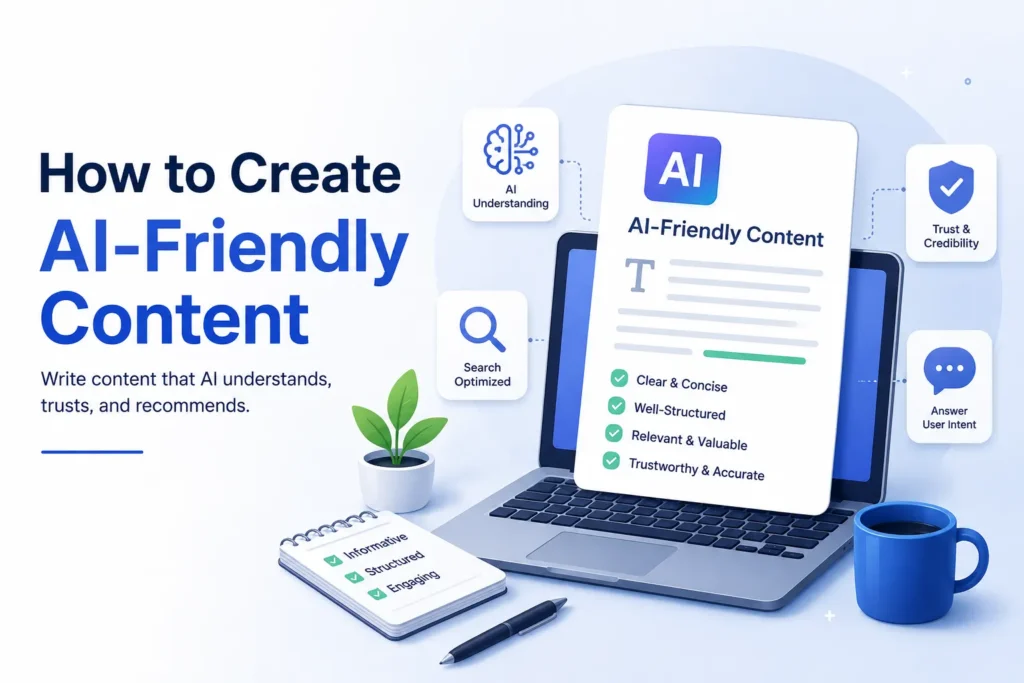
Artificial intelligence is changing the way people discover and consume information online. Search engines now use AI-powered features, while platforms like ChatGPT, Gemini, and Perplexity generate direct answers from trusted content sources. As a result, creating content that is easy for both humans and AI systems to understand has become essential.
AI-friendly content is not about writing for machines alone. It is about creating clear, well-structured, and valuable content that can be easily interpreted, indexed, and cited by AI systems while delivering a great user experience. By focusing on structure, formatting, and writing techniques, you can improve visibility across traditional search results and AI-generated answers.
What Is AI-Friendly Content?
AI-friendly content is content that is organized, easy to scan, and provides direct, reliable answers to user questions. AI systems analyze page structure, headings, context, and relevance to determine whether content is useful enough to include in generated responses.
Unlike traditional SEO content that may focus heavily on keywords, AI-friendly content prioritizes clarity, topical depth, credibility, and logical organization. The goal is to make information easy to extract and understand.
Why AI-Friendly Content Matters in SEO
As AI-powered search experiences become more common, content creators need to optimize beyond traditional rankings.
Benefits of AI-friendly content include:
- Increased visibility in AI-generated answers
- Better user engagement and readability
- Improved search engine understanding
- Higher chances of earning citations and references
- Enhanced authority and trustworthiness
Research and industry observations show that content with strong structure, evidence-backed information, and clear formatting is more likely to be surfaced by AI systems.
Structure Your Content for AI Understanding
Start with a Direct Answer
One of the most effective ways to create AI-friendly content is to answer the primary question early in the article. Instead of writing a lengthy introduction, provide a concise explanation within the first few paragraphs.
For example, if your topic is “What is AI-friendly content?”, answer that question immediately before diving into details.
This approach helps AI systems quickly identify the main topic and improves the chances of your content being referenced in AI-generated responses.
Use a Clear Heading Hierarchy
Headings help both readers and AI systems understand the structure of your content.
Follow a logical hierarchy:
- H1 for the main title
- H2 for major sections
- H3 for subtopics within sections
- H4 only when necessary
A well-organized heading structure improves readability and helps AI identify relationships between topics. AI systems often use headings as contextual signals when analyzing content.
Create Detailed Outlines Before Writing
A strong outline serves as the foundation of AI-friendly content. It ensures logical flow and comprehensive topic coverage. Before writing the content:
- Identify the main topic
- List supporting subtopics
- Add relevant questions users may ask
- Organize information in a logical sequence
Professional content writers often use detailed outlines to maintain clarity and ensure that every section contributes value.
How to Improve Readability Through Formatting
Keep Paragraphs Short
Large blocks of text can be difficult for readers and AI systems to process.
Aim for:
- 2–4 sentences per paragraph
- One primary idea per paragraph
- Clear transitions between sections
Short paragraphs improve scannability and make information easier to digest.
Use Bullet Points and Numbered Lists
Lists help break down complex information into smaller, digestible sections.
Use bullet points when:
- Highlighting benefits
- Summarizing key takeaways
- Presenting features
Use numbered lists when:
- Explaining processes
- Providing step-by-step instructions
- Ranking recommendations
Structured content is easier for AI systems to extract and present in responses.
Include FAQ Sections
Frequently Asked Questions provide direct answers to common user queries.
- Better topical coverage
- Improved user experience
- Increased opportunities for AI citation
- Enhanced visibility in search features
Question-based content aligns closely with how users interact with AI assistants and search engines.
Writing Techniques That Make Content AI-Friendly
Focus on Search Intent
Before writing, understand what the audience wants to know.
Common search intents include:
- Informational
- Navigational
- Commercial
- Transactional
When your content directly addresses user intent, it becomes more useful and relevant to both readers and AI systems.
Provide Evidence and Credible Information
AI systems favor content supported by trustworthy information.
Strengthen your content with:
- Industry research
- Statistics
- Expert insights
- Case studies
- Real-world examples
Evidence-backed content improves credibility and increases the likelihood of being referenced by AI-generated answers.
Add Human Experience and Unique Insights
AI-generated content alone often lacks originality. To stand out, incorporate:
- Personal experiences
- Practical examples
- Industry observations
- Expert opinions
- Lessons learned
Unique perspectives make content more valuable and help establish authority. Human expertise remains a key differentiator in the AI era.
Write in a Conversational Yet Professional Tone
AI systems tend to favor content that is easy to understand.
Best practices include:
- Use simple language
- Avoid unnecessary jargon
- Write naturally
- Answer questions directly
- Maintain a helpful tone
A conversational writing style improves user engagement while making content easier for AI to interpret.
What are Common Mistakes to Avoid While Creating AI-Friendly Content
When creating AI-friendly content, avoid:
- Keyword stuffing
- Poor heading structure
- Long, unbroken text blocks
- Generic AI-generated content without editing
- Weak factual accuracy
- Lack of original insights
- Ignoring user intent
Successful AI-friendly content combines automation with human expertise and editorial review.
Summary
Creating AI-friendly content requires more than simply adding keywords. The most effective content is structured, easy to read, well-formatted, and designed to answer user questions clearly. By using logical heading hierarchies, concise formatting, evidence-backed information, and original insights, you can improve both user experience and AI visibility.
As AI continues to shape search and content discovery, writers who focus on clarity, credibility, and helpfulness will be better positioned to reach wider audiences and earn greater visibility online.
Frequently Asked Questions
- What is AI-friendly content?
AI-friendly content is content that is structured, clear, and easy for AI systems to understand, analyze, and reference while providing value to readers.
- Why is content structure important for AI?
A clear structure helps AI systems identify key topics, understand relationships between sections, and extract information more accurately.
- Do headings help AI understand content?
Yes. Proper use of H1, H2, and H3 headings improves content organization and helps AI systems understand the hierarchy of information.
- Can AI-generated content rank in search results?
Yes, provided the content is accurate, helpful, original, and enhanced with human expertise and fact-checking.
- What is the best format for AI-friendly content?
The best format includes a direct answer, logical heading structure, short paragraphs, bullet points, FAQs, and evidence-backed information.